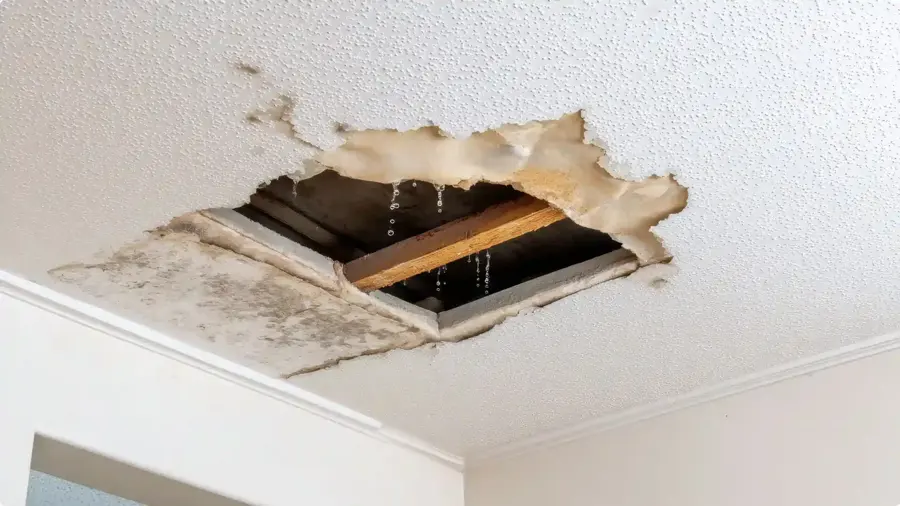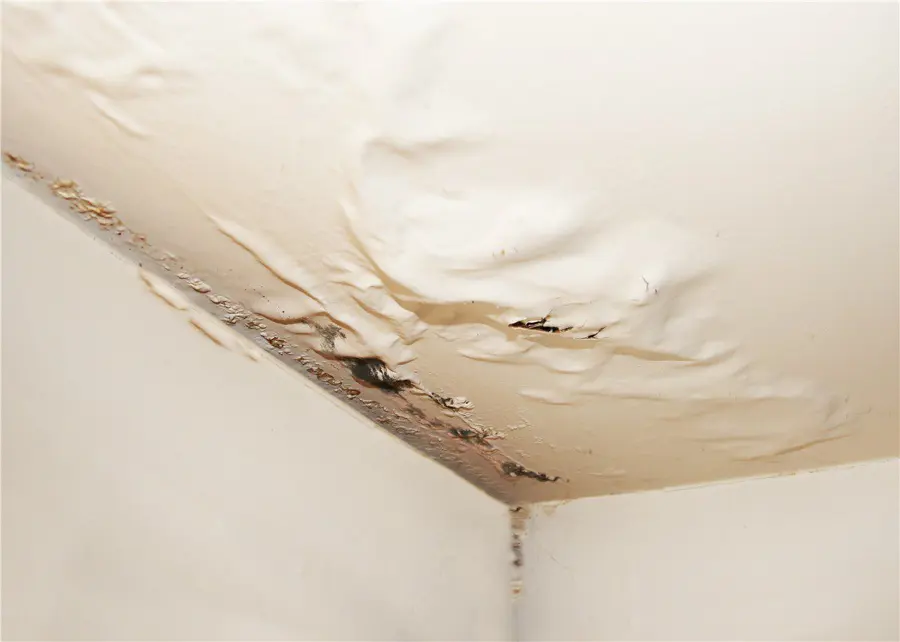
Where ceiling leaks start in Oceanside
Oceanside has thousands of two-story tract homes and stacked condos, from the beach blocks along Pacific Street to complexes near Mira Costa and Tri-City. In both, the most common source of a ceiling leak is plumbing on the floor above:
- A toilet supply line or wax ring leaking into the joist bay.
- A shower pan or tub drain that has failed over time.
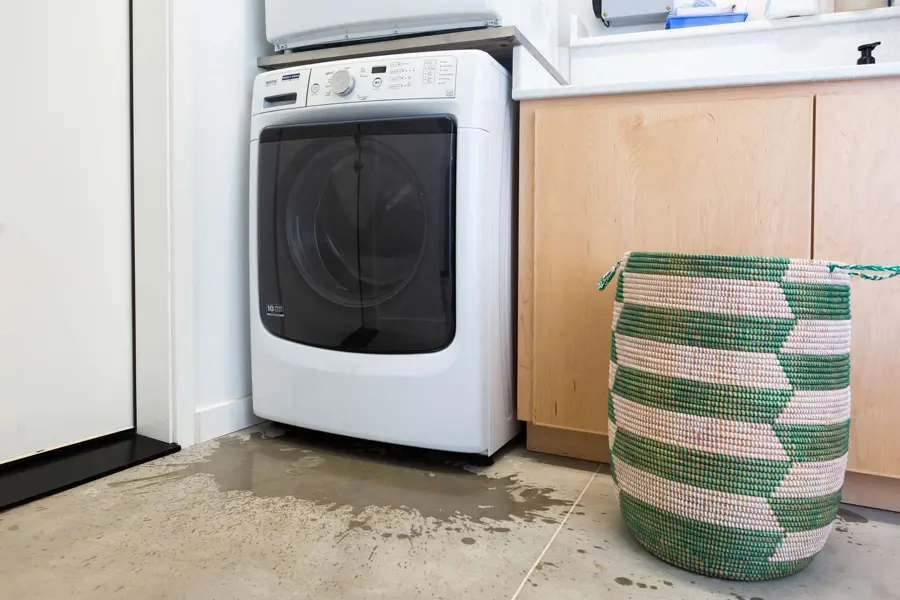
- A washer hose or drain on a second-floor laundry.
- An overflowing tub or sink in the unit upstairs.
If the water comes from the roof during a storm, that is a different job; see roof leak water damage. An appliance on the upper floor is covered under appliance leak cleanup.
How the drying works
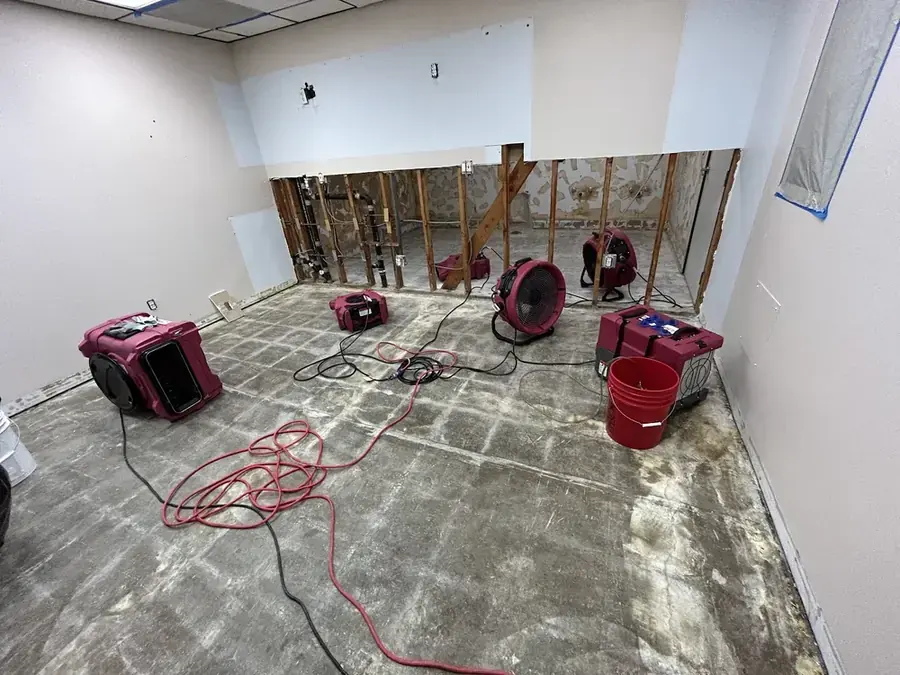
The mitigation team measures the ceiling with pinless meters and thermal imaging, opens sagging sections, and removes wet insulation that will not dry. Air movers and a dehumidifier are set in the room below, and sometimes air is directed into the joist bay from above. Drying continues until readings match dry material elsewhere in the home.
Water from a toilet leak or a washer drain is usually Category 2 gray water, which means more of the soaked material is removed rather than dried.
Condos and shared ceilings
When the leak starts in another unit, two owners and often an HOA are involved. The claim file with photos, a moisture map and daily logs helps each insurer see what happened. The California Department of Insurance explains how condo and homeowners policies differ. Mold can start within 24 to 48 hours on wet drywall, per the EPA guide to mold and moisture.